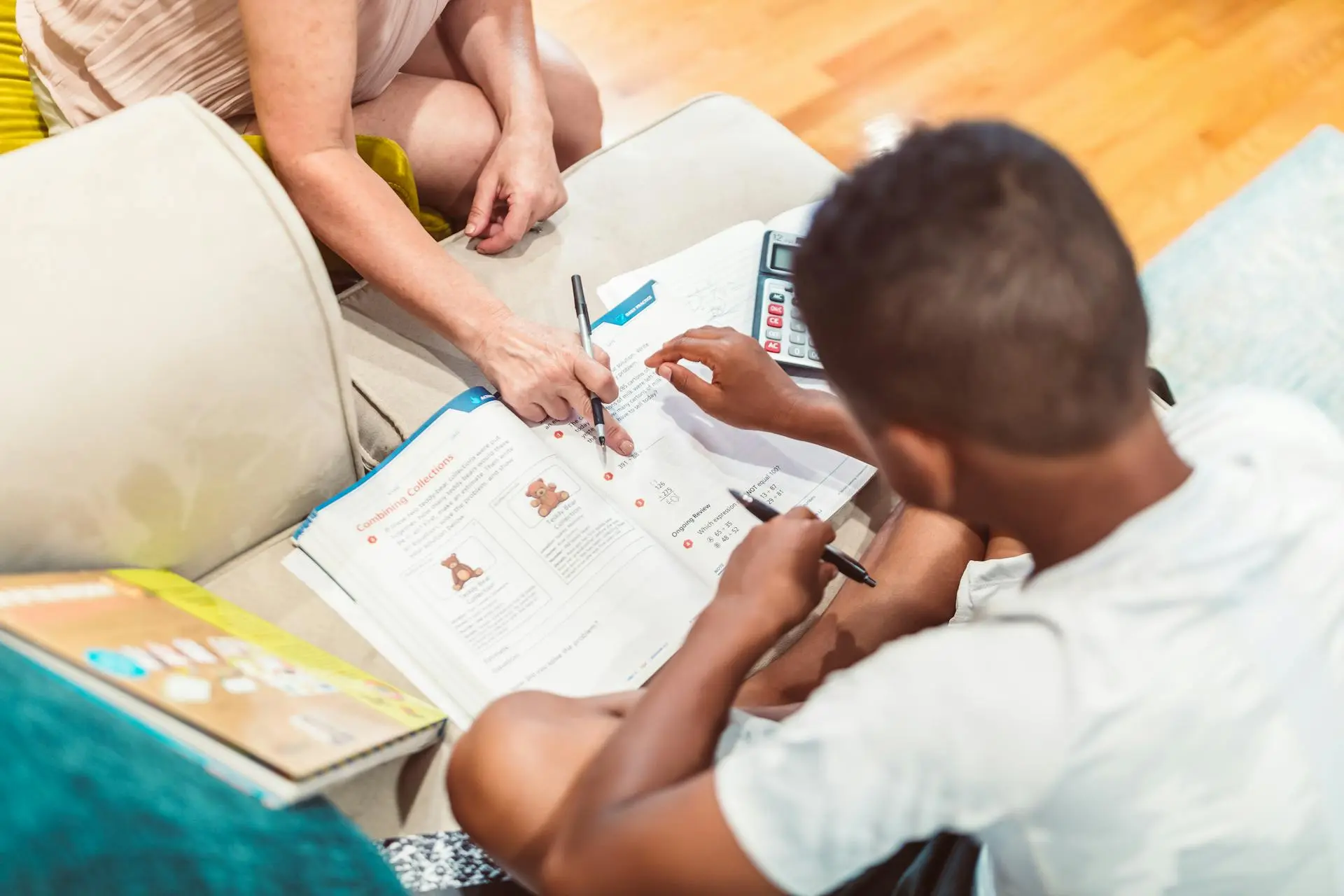
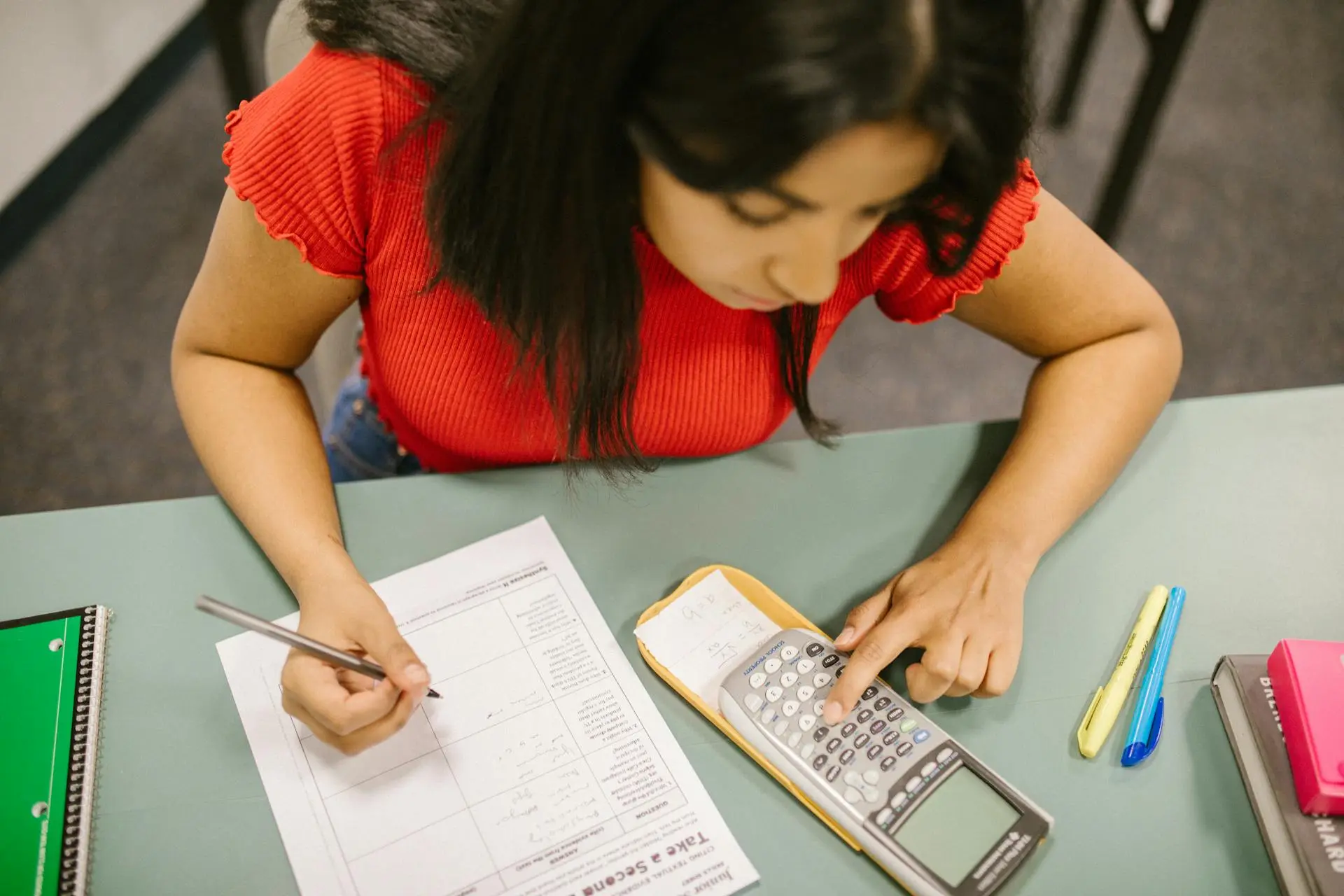
Why PSLE Math Problem Sums Are Challenging
PSLE math questions are designed to assess more than computational skills. The exam evaluates whether students can understand mathematical relationships, interpret information from word problems, and apply logical reasoning to arrive at correct solutions.
In many cases, students must:
- Read and interpret multi-sentence questions
- Identify relevant numerical relationships
- Apply multiple mathematical concepts
- Solve problems step by step
This combination of language comprehension and mathematical reasoning is why problem sums can feel particularly challenging.
Unlike simple calculations, problem sums require students to slow down and think carefully about what the question is asking. Students must analyse the situation described, determine how quantities are connected, and plan the correct sequence of steps before solving the problem.
Parents who are unfamiliar with the exam format may first find it helpful to read this PSLE exam preparation guide to better understand how PSLE questions are structured. For a broader overview of how tuition supports students across different academic levels, parents may also refer to this PSLE and O-Level tuition guide.
When students understand the purpose of these questions, they often become less intimidated by them.
Common Difficulties Students Face With Problem Sums
Students may struggle with PSLE math problem sums even when they understand the mathematical concepts being tested.
Several factors commonly contribute to these difficulties.
1. Difficulty Interpreting Word Problems
Many PSLE questions contain several pieces of information within a single paragraph.
Students must carefully determine:
- Which numbers are relevant
- How quantities are related
- Which operations to use
Without a clear strategy for interpreting questions, children may misread the problem or overlook key information.
Parents exploring ways to strengthen these skills may find it helpful to read this PSLE math preparation guide, which explains how reasoning skills are developed through structured practice.
2. Multi-Step Problem Solving
Unlike straightforward calculations, many PSLE math problem sums require multiple steps of reasoning.
For example, a student may need to:
- Identify relationships between quantities
- Calculate intermediate values
- Use those results to determine the final answer
Students who attempt to skip these steps or rush through the process often become confused.
Many children try to solve the problem immediately without fully understanding the relationships described in the question. When the reasoning process is unclear, students may apply incorrect operations or overlook important steps.
Learning to break down problems systematically is therefore essential for success in PSLE mathematics.
With regular practice, students gradually learn how to organise their thinking before attemptin calculations. This structured approach helps reduce confusion and improves accuracy.
3. Difficulty Translating Words Into Mathematical Models
Some students understand mathematical concepts well but struggle to convert word descriptions into equations or visual models.
For example, phrases such as:
- “twice as many”
- “the difference between”
- “remaining amount”
require interpretation before calculations can begin.
Developing this translation skill is a key part of improving problem-solving ability.
Teachers often encourage students to draw diagrams, bar models, or visual representations to help clarify the relationships between quantities.
Why Understanding the Question Is Often the Hardest Step
Parents sometimes assume that mistakes occur because children are weak in calculations. However, the most challenging part of problem sums is often understanding what the question is asking.
Before solving the problem, students must:
- Identify important information
- Determine relationships between quantities
- Decide the sequence of calculations
If this reasoning stage is unclear, children may attempt random calculations without a clear plan.
This is where personalised 1-to-1 tuition can make a meaningful difference. Tutors can guide students step by step through the reasoning process, helping them understand how to approach questions logically.
Parents who are evaluating learning support options may also find this guide on choosing the best private tutor in Singapore helpful when considering different teaching approaches.
The Importance of Structured Problem-Solving Methods
Singapore’s mathematics curriculum emphasises structured thinking rather than memorisation.
Students who become confident in PSLE math problem sums often develop strategies such as:
- Drawing bar models to visualise relationships
- Organising information clearly before solving
- Breaking complex questions into smaller steps
- Checking whether answers are reasonable
These strategies help students build a clear problem-solving framework. Instead of feeling overwhelmed by long questions, they learn to approach each step calmly and methodically.
With consistent practice, these techniques become natural habits that improve both speed and accuracy.
Visit Ann Tutor’s 1 to 1 PSLE Math tuition which helps reinforce these techniques so students learn how to approach challenging problems calmly and systematically.
How Parents Can Support Their Child’s Learning
Parents play an important role in supporting their child’s mathematical development.
Rather than focusing only on correct answers, parents can encourage children to focus on how they think through problems.
Some helpful strategies include:
- Asking children to explain their reasoning aloud
- Encouraging them to draw diagrams or models
- Practising problem sums regularly rather than memorising solutions
- Maintaining a calm learning environment for practice
Encouraging children to explain their thought process helps them organise their reasoning more clearly. When students articulate their thinking, they become more aware of how they approach problems and where mistakes occur.
Parents should also remember that confidence plays an important role in learning mathematics. When children feel supported and encouraged, they are more willing to attempt challenging questions and learn from mistakes.
A positive learning environment helps children build resilience and gradually develop stronger problem-solving abilities.