Brain Training for Children: Can It Support Learning?
Parents often look for ways to help their children improve concentration, memory and problem-solving skills, particularly when schoolwork becomes more demanding. One approach that has gained attention is brain training for children, which involves games and structured activities designed to practise specific thinking skills.
But can brain training genuinely support learning? And how does it differ from academic tuition Brain training can provide opportunities for children to practise cognitive skills, but improvements in games do not necessarily translate into better examination results.
At Ann Tutor – Private Tutor in Singapore, academic support focuses on understanding each child’s learning needs and providing structured, personalised one-to-one tuition in English, Mathematics and Science.
This guide explains what brain training involves, which skills it targets, what research suggests and how parents can use it alongside academic learning.
Table of Contents
- What Is Brain Training for Children?
- What Cognitive Skills Does Brain Training Target?
- Can Brain Training Improve Academic Learning?
- Is Brain Training Suitable for Children With Special Educational Needs?
- What Brain-Training Activities Can Children Try?
- Why Brain Training Should Complement Academic Teaching
- How Personalised Tuition Supports Different Learning Needs
- Final Thoughts
What Is Brain Training for Children?
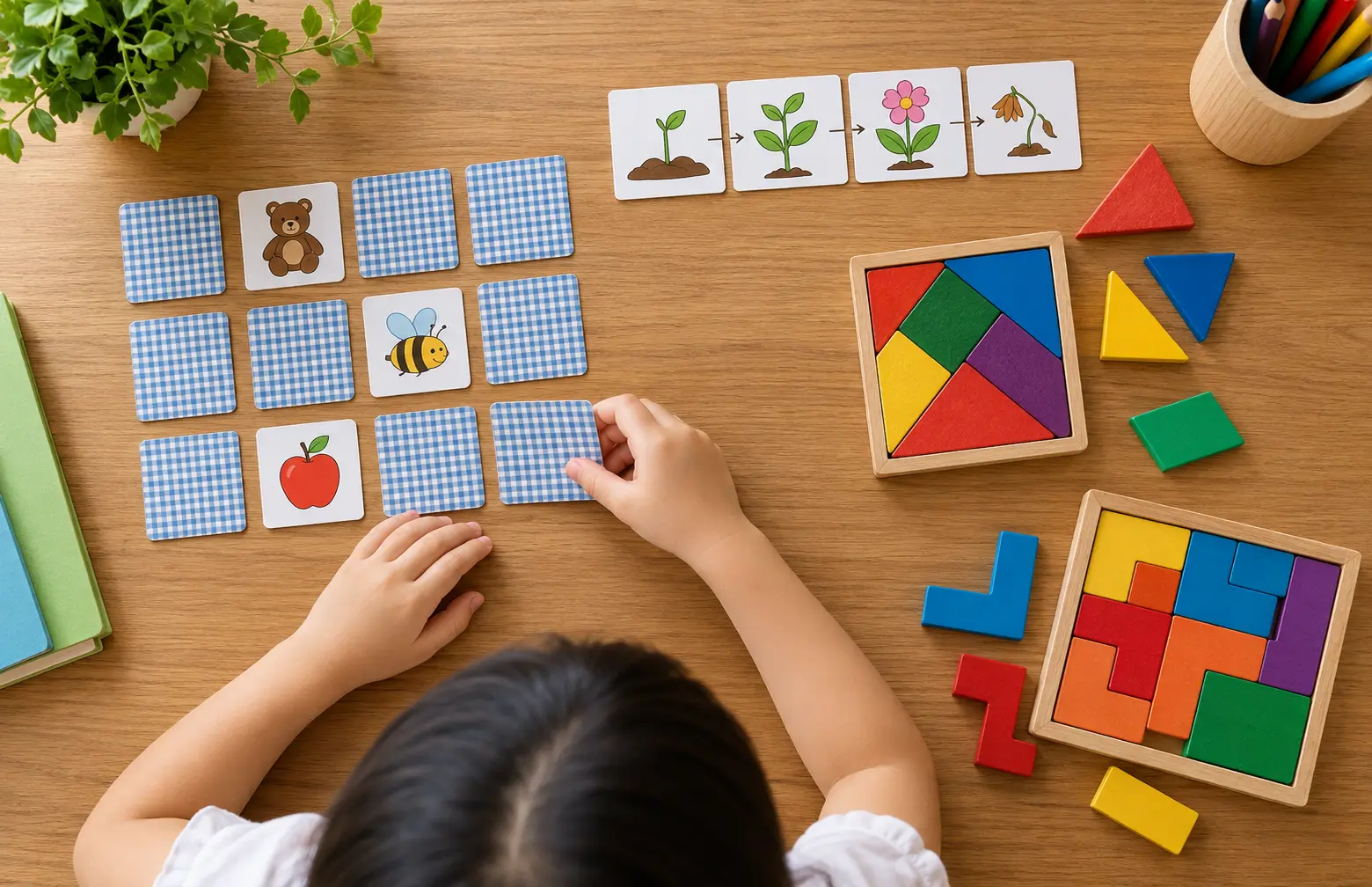
Brain training for children refers to activities intended to exercise particular cognitive processes, such as remembering information, concentrating on a task or solving problems. These activities may include memory games, sequencing exercises, logic puzzles and tasks requiring children to switch between different rules.
Some are delivered through digital programmes, while others use everyday materials such as cards, blocks or pictures. The purpose is usually to provide repeated practice in a particular thinking skill.
However, brain training should not be confused with direct academic instruction. For example, completing a memory game may help a child become more proficient at that game, but it does not directly teach Mathematics concepts or English comprehension strategies.
Understanding this distinction helps parents set realistic expectations.
What Cognitive Skills Does Brain Training Target?

Several cognitive processes are commonly associated with brain-training activities.
Working Memory
Working memory allows children to hold and use information over short periods.
A student may use working memory when remembering the steps of a Mathematics problem or following a teacher’s instructions.
Memory-sequencing games provide opportunities to practise remembering information in a particular order.
Attention
Attention involves directing mental effort towards relevant information.
Children use attention when listening to explanations, reading passages and completing written tasks.
Activities involving visual searches or identifying differences can provide structured opportunities to practise attention within those tasks.
Planning and Organisation
Planning involves deciding what needs to be done and arranging actions in a suitable order.
For example, a student writing a composition may need to organise ideas before developing paragraphs.
Sequencing and multi-step challenges can introduce children to planning in an enjoyable way.
Cognitive Flexibility
Cognitive flexibility refers to adapting when rules, information or circumstances change. A child may need this skill when switching between different question types or trying another problem-solving method.
Games that require sorting objects according to changing rules can provide practice in adjusting responses. These skills are relevant to everyday learning, although practising them through games does not guarantee wider academic improvement.
Can Brain Training Improve Academic Learning?
This is an important question for parents considering brain-training programmes. Research suggests that children can improve at cognitive tasks they practise repeatedly. However, evidence that these gains consistently transfer to broader intelligence, academic achievement or everyday functioning remains limited.
For instance, a child may become faster at a visual memory game without showing a corresponding improvement in reading comprehension. This does not mean brain-training activities have no value. They can be enjoyable, provide structured challenges and encourage children to persist with tasks.
The key is to distinguish between improvement within a trained activity and improvement in school performance. For academic outcomes, children generally need direct instruction in the knowledge and strategies required by their subjects.
Parents should therefore be cautious about programmes promising substantial improvements in examination scores through cognitive exercises alone.
Is Brain Training Suitable for Children With Special Educational Needs?

Some children with Special Educational Needs (SEN) may enjoy brain-training activities when the tasks are adapted to their abilities and interests. For example, children with ADHD may benefit from short activities with clear instructions and manageable demands. Autistic children may respond differently depending on their preferences, sensory needs and comfort with changes in rules. Children with dyslexia may participate in visual or non-reading-based activities, although these do not replace explicit reading instruction. The suitability of an activity depends on the individual child rather than the diagnostic label alone.
Children with Special Educational Needs may also experience difficulties that extend beyond attention or memory, including challenges with classroom instructions, academic expectations and adapting to different learning environments. Parents can explore our guide to challenges SEN students face in mainstream schools to better understand these difficulties and the support that may be helpful.
Importantly, generic brain-training games are not established treatments for ADHD, autism or dyslexia. Where learning difficulties affect schoolwork, targeted academic support is usually more relevant than relying solely on cognitive games.
For children who require additional learning support, Ann Tutor’s Special Needs Tuition offers personalised academic guidance adapted to individual learning needs.
Parents can also read our Brain Training for ADHD guide to understand the evidence and limitations of cognitive training for children with ADHD.
What Brain-Training Activities Can Children Try?
Parents do not need expensive software to introduce simple cognitive challenges at home.
Examples include memory matching cards, picture sequencing, pattern puzzles and games involving changing rules.
A child might begin with four pairs of memory cards before progressing to a larger set. Another activity could involve arranging picture cards into a logical story sequence and explaining the order.
The aim is to provide an achievable challenge while keeping the experience enjoyable.
Parents should adjust the difficulty according to their child’s abilities and avoid treating every activity as a test.
Why Brain Training Should Complement Academic Teaching
Brain-training games and academic teaching serve different purposes. Cognitive exercises offer practice in particular tasks. Academic teaching helps students understand subject knowledge, apply strategies and address learning gaps.
For example, a child struggling with Mathematics word problems may need explicit instruction in identifying relevant information and choosing suitable methods. A student who finds English composition difficult may need guidance in planning narratives, developing vocabulary and organising paragraphs.
Neither difficulty is likely to be resolved through memory games alone. Parents can still use cognitive activities as an enjoyable supplement, but they should prioritise teaching that addresses the child’s actual academic needs. When important examinations are approaching, targeted revision and guided practice may be more appropriate than introducing additional cognitive-training programmes.
For students who need focused academic preparation within a shorter timeframe, Ann Tutor’s Ultimate 360 Programme offers a structured three-month intensive tuition option. Parents can also explore our three-month examination preparation guide to understand the role of targeted revision and realistic preparation goals.
How Personalised Tuition Supports Different Learning Needs

Children do not all learn at the same pace or respond to the same teaching methods. Some require additional time to understand foundational concepts, while others need help applying what they already know.
Personalised tuition allows lessons to be adjusted according to these differences. With over 30 years of teaching experience, Ann Tutor supports Primary School to Lower Secondary students through structured explanations, guided practice and teaching approaches adapted to individual learning needs.
Depending on the student’s needs, lessons may include breaking down complex questions, modelling problem-solving strategies, providing visual explanations and gradually reducing support as understanding improves. For children who require more individualised learning support, teaching approaches may need to be adapted further. Our guide on what a special needs tutor does differently explains how structured instructions, flexible teaching methods and personalised guidance can support students with different learning needs.
For students who struggle with foundational concepts or applying what they have learnt, personalised academic guidance can help identify specific difficulties and provide more targeted support. This approach focuses directly on academic learning while recognising the importance of attention, confidence and individual learning differences. Brain-training activities may complement these lessons, but they are not substitutes for structured teaching.
Final Thoughts
Brain training for children can provide enjoyable opportunities to practise memory, attention, planning and flexible thinking.
However, improvements in specific games should not be mistaken for guaranteed improvements in school performance.
Parents can use simple cognitive activities as part of a balanced learning routine while ensuring that academic difficulties receive appropriate attention.
If your child is struggling with English, Mathematics or Science, personalised instruction can help identify learning gaps and provide more targeted guidance.
Contact Ann Tutor to discuss your child’s learning needs and explore suitable tuition options.

You Might Also Like
Looking for the best English tuition Singapore parents can consider? Learn what to look for in a tutor, from personalised teaching to exam preparation.
Struggling with PSLE English composition writing? Discover proven strategies to help your child improve writing skills, confidence, and exam performance.
Looking for the best math tuition Singapore? Discover proven strategies and expert tips to help your child build confidence and succeed in mathematics.