What Is Brain Training for Dyslexia?
Brain training for dyslexia generally refers to activities intended to practise cognitive processes such as working memory, attention, sequencing and information processing.
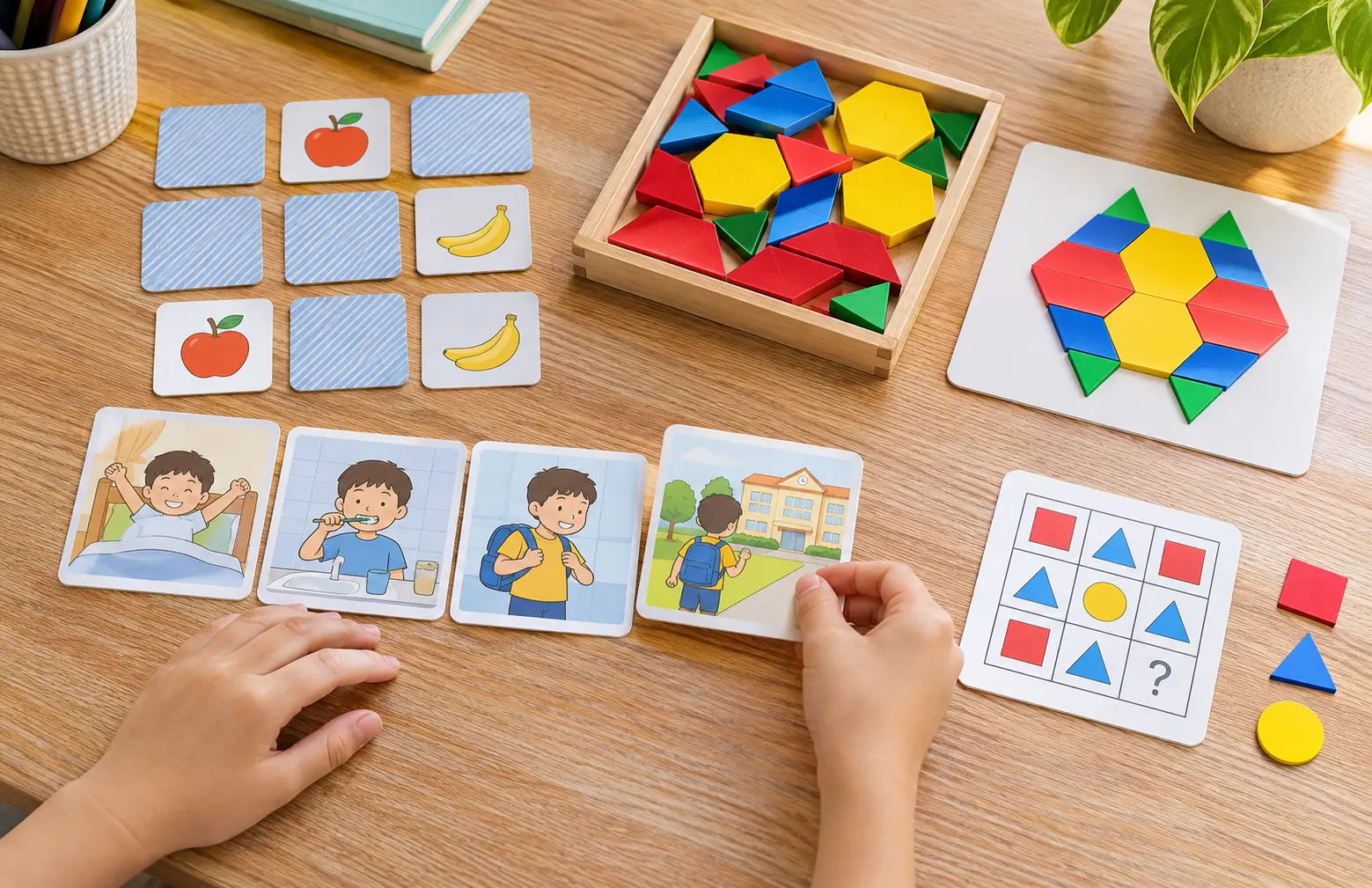
These may include computerised memory exercises, pattern recognition games, sequencing activities or puzzles. For example, a child might practise remembering a series of pictures or following a sequence of instructions.
The idea is that repeated practice could strengthen certain cognitive skills involved in learning. However, dyslexia primarily involves difficulties with accurate or fluent word reading and spelling. General cognitive exercises do not directly teach children how written letters represent speech sounds.
This distinction is important when parents compare brain-training programmes with reading interventions. For a broader explanation of cognitive training and its limitations, read our Brain Training for Children guide.
How Does Dyslexia Affect Reading and Learning?
Dyslexia affects individuals differently. Children may experience difficulties in several areas of literacy while demonstrating strengths in other aspects of learning.
1. Recognising and Decoding Words
Some children find it difficult to connect letters and letter combinations with their corresponding speech sounds. This can make unfamiliar words challenging to read, particularly when they contain complex spelling patterns. A child may recognise a familiar word but struggle to decode a similar unfamiliar word independently.
2. Reading Fluency
When recognising words requires considerable effort, reading may become slow or hesitant. Students may need additional time to complete passages, even when they understand the topic being discussed.
3. Spelling and Written Expression
Children with dyslexia may experience persistent spelling difficulties. Some also find written assignments demanding because they must manage spelling, sentence construction and the organisation of ideas simultaneously.
4. Reading Comprehension
Not every child with dyslexia has a language-comprehension difficulty. However, when substantial effort is spent decoding words, fewer cognitive resources may be available for understanding the passage.
For students in Singapore, these difficulties can affect English comprehension, written assignments and subjects requiring extensive reading. Parents can explore our existing guide to Dyslexia Tuition Singapore for a more detailed discussion of educational support.
Does Brain Training for Dyslexia Actually Work?
Research does not currently establish general brain training as an effective replacement for evidence-based reading instruction. Some cognitive programmes aim to improve working memory, attention or processing speed. Children may become better at the exercises they repeatedly practise. However, improving performance on a memory task does not necessarily improve decoding, spelling or reading comprehension.
A 2024 study, Working Memory Training in Students With Dyslexia: Additional Effects to Reading and Spelling Remediation Not Likely, examined whether working-memory training provided additional benefits alongside reading and spelling intervention. Its findings did not support expecting meaningful additional reading and spelling improvements from the working-memory programme. Parents can read the study indexed on PubMed for further details.
This does not mean that all games involving memory or attention are without value. They may be enjoyable activities that allow children to practise specific tasks. However, parents should be cautious about programmes claiming that general brain exercises can treat dyslexia or reliably improve literacy outcomes.
What Brain-Training Activities Can Children Try?
Parents can introduce simple games that encourage children to practise remembering, sequencing and solving problems.
These activities should remain enjoyable and should not be presented as treatments for dyslexia.
For example, a child could arrange picture cards showing the stages of preparing for school. Parents can encourage the child to explain what happens first, next and last. Another option is a pattern game using coloured blocks, where the child identifies which item comes next.
For seven detailed examples with step-by-step instructions, explore our Brain Training Activities for Kids guide.
Children with dyslexia may benefit from clear instructions, visual examples and manageable activity lengths. Nevertheless, these exercises should complement rather than replace targeted reading instruction.
Why Structured Literacy Instruction Matters
For children with dyslexia, learning to read requires more than practising general memory or attention skills.
Effective literacy intervention focuses directly on the knowledge and processes involved in reading and spelling.
The International Dyslexia Association describes structured literacy as an explicit, systematic approach to teaching language and written words.
Important components include:
Phonemic Awareness
Children learn to identify and manipulate individual sounds within spoken words.
For example, they may practise identifying the beginning sound of a word or combining sounds to form a complete word.
Systematic Phonics
Students receive direct instruction in how letters and letter combinations represent speech sounds.
They gradually learn to apply these relationships when reading unfamiliar words.
Reading Fluency
Repeated, appropriately guided reading practice can help children develop more accurate and fluent word recognition.
Vocabulary and Comprehension
Students also need opportunities to understand word meanings, interpret sentences and make sense of longer passages. These skills should be taught alongside foundational reading instruction.
In Singapore, the Dyslexia Association of Singapore similarly describes structured teaching across phonics, fluency, comprehension and writing.
The key difference is that structured literacy instruction directly teaches reading and writing skills, whereas general brain-training games do not necessarily address these areas.
Can Brain Training Replace Dyslexia Tuition?
Brain training and dyslexia-focused learning support serve different purposes. Brain-training exercises generally involve practising cognitive tasks such as remembering information or identifying patterns. Dyslexia intervention focuses on specific literacy difficulties, including decoding, spelling and reading fluency.
For example, a child who struggles to read unfamiliar words may require systematic instruction in sound-letter relationships rather than additional memory games. Similarly, a student who finds English comprehension challenging may benefit from explicit teaching of vocabulary, sentence meaning and comprehension strategies.
Parents should therefore distinguish between specialist literacy intervention and general academic tuition. A child with significant decoding or spelling difficulties may require support from a suitably trained dyslexia or literacy specialist.
Academic tuition can complement that intervention by helping the child understand school subjects, manage assignments and apply appropriate learning strategies.
For families considering broader support, our article on what a special needs tutor does differently explains how individualised teaching can respond to different learning profiles.
When Should Parents Consider Additional Learning Support?
Parents may wish to seek further guidance when reading and spelling difficulties persist despite appropriate teaching and practice.
Possible indicators include:
- Persistent difficulty reading unfamiliar words.
- Slow or effortful reading that affects schoolwork.
- Recurring spelling difficulties.
- Avoidance of reading or writing assignments.
- Difficulty completing written tasks within the available time.
These signs do not automatically establish that a child has dyslexia.
If concerns persist, parents can discuss them with the child’s teachers and seek an appropriate professional assessment. Understanding the child’s learning profile can help identify whether specialist literacy intervention, classroom accommodations or additional academic support may be beneficial.
Parents may also find our guide to key signs your child may need tuition from a special needs tutor useful when considering additional educational support.